-
President of Uzbekistan concludes his official visit to Belarus
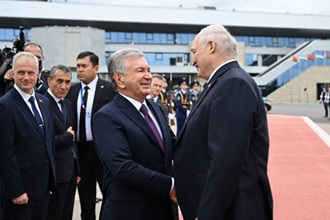
2026-07-09 80The official visit of the President of the Republic of Uzbekistan Shavkat Mirziyoyev to the Republic of Belarus has concluded. At the capital’s airport, the distinguished guest was seen off by the President of the Republic of Belarus Alexander Lukashenko.
-
Presidents of Uzbekistan and Belarus outline results of fruitful talks
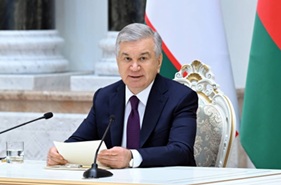
2026-07-09 79The President of the Republic of Uzbekistan Shavkat Mirziyoyev and the President of the Republic of Belarus Alexander Lukashenko made statements to the media following the talks.
-
Uzbekistan and Belarus elevate relations to the level of strategic partnership
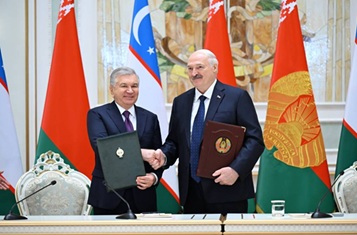
2026-07-09 80Following the talks, the President of the Republic of Uzbekistan Shavkat Mirziyoyev and the President of the Republic of Belarus Alexander Lukashenko signed a Declaration on the Establishment of Strategic Partnership.
-
Ceremonial welcome held for the President of Uzbekistan
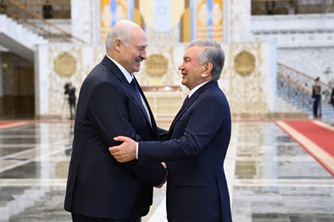
2026-07-09 26An official welcoming ceremony for the President of the Republic of Uzbekistan Shavkat Mirziyoyev was held at the Palace of Independence in Minsk.
-
Key information materials on promoting the tourism potential of the Republic of Uzbekistan and its image as a safe tourist destination
2026-07-09 29Uzbekistan is one of the safest countries in the world
-
Uzbekistan and Belarus: Stable Partnership and Strategic Development Prospects
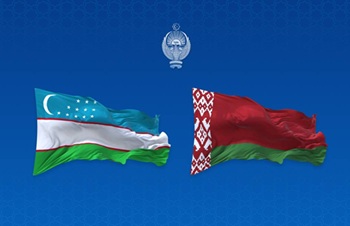
2026-07-09 69Contemporary relations between Uzbekistan and Belarus demonstrate a steady upward trajectory, based on the principles of mutual respect, trust and pragmatism. Despite their geographical distance, the two countries have succeeded in establishing an effective system of partnership built upon the complementarity of their economies, the similarity of their approaches to socio-economic development, and their shared interest in expanding mutually beneficial cooperation.
-
Uzbekistan and Belarus strengthen multifaceted partnership based on mutual trust and pragmatic cooperation
2026-07-09 43Official visit of the President of Uzbekistan to Belarus begins on July 8th
-
President of Uzbekistan lays wreath at Victory Monument
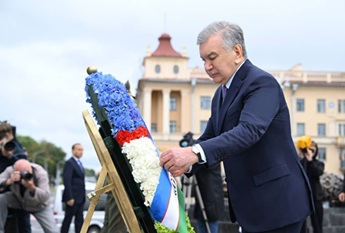
2026-07-08 58The President of the Republic of Uzbekistan Shavkat Mirziyoyev laid a wreath at the Victory Monument in Minsk.
-
President of Uzbekistan begins his official visit to Belarus
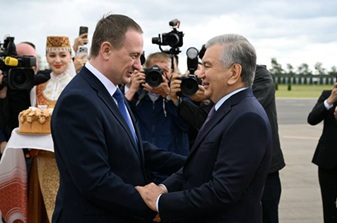
2026-07-08 48President of the Republic of Uzbekistan Shavkat Mirziyoyev has arrived in Minsk on an official visit.
-
President of Uzbekistan to pay an official visit to Belarus
2026-07-08 58At the invitation of the President of the Republic of Belarus Alexander Lukashenko, the President of the Republic of Uzbekistan Shavkat Mirziyoyev will pay an official visit to Belarus on July 8-9.