-
President of Uzbekistan defines new areas for cooperation with foreign investors
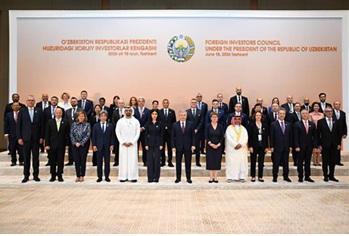
2026-06-18 117On June 18, the President of the Republic of Uzbekistan Shavkat Mirziyoyev chaired the next plenary session of the Foreign Investors Council at the International Congress Center.
-
President of Uzbekistan outlines priorities for a comprehensive partnership with the EBRD
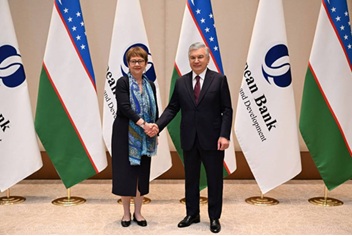
2026-06-18 111On June 18, during the regular meeting of the Foreign Investors Council, the President of the Republic of Uzbekistan Shavkat Mirziyoyev received a delegation from the European Bank for Reconstruction and Development, led by its President Odile Renaud-Basso.
-
The President of Uzbekistan stressed the importance of further expanding multifaceted partnership with Kazakhstan
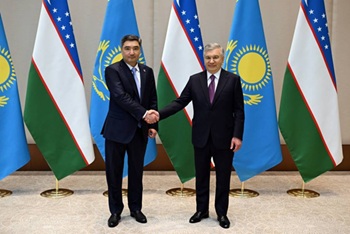
2026-06-18 111The President of the Republic of Uzbekistan Shavkat Mirziyoyev received the Prime Minister of the Republic of Kazakhstan Olzhas Bektenov within the framework of the fifth Tashkent International Investment Forum.
-
Prime Minister of Tajikistan concludes his visit to Uzbekistan
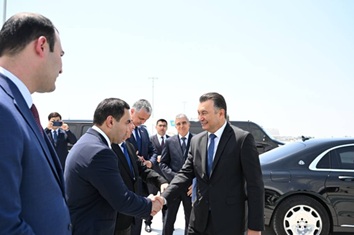
2026-06-18 79In accordance with the program of his stay, Kohir Rasulzoda addressed the plenary session of the Fifth Tashkent International Investment Forum and held several meetings and negotiations to strengthen the allied relations between the two countries.
-
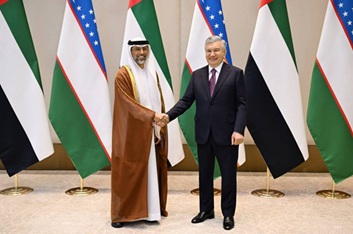
Issues of implementing major investment projects with the UAE discussed
2026-06-18 71The President of the Republic of Uzbekistan Shavkat Mirziyoyev held a meeting with a delegation led by the Minister of Energy and Infrastructure of the United Arab Emirates, Suhail Al Mazrui.
-
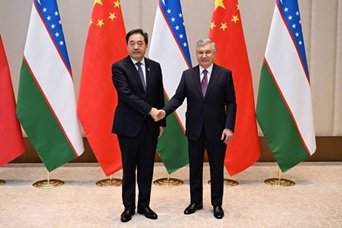
The President of Uzbekistan stressed the importance of expanding technological and investment partnership with China
2026-06-18 95Within the framework of the Tashkent International Investment Forum, the President of the Republic of Uzbekistan Shavkat Mirziyoyev received a delegation of leading companies and financial institutions of the People's Republic of China, led by the Head of the National Energy Administration of the People's Republic of China Wang Hongzhi.
-
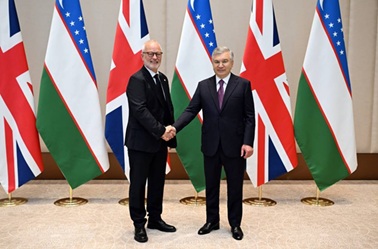
President of Uzbekistan receives delegation of the United Kingdom
2026-06-18 88As part of the Tashkent International Investment Forum, the President of the Republic of Uzbekistan Shavkat Mirziyoyev received a delegation from British business circles led by the Minister for Investment, Lord Jason Stockwood.
-
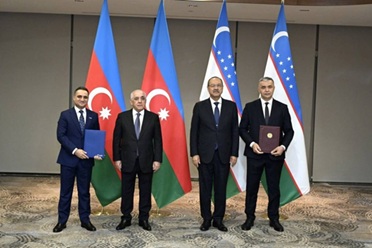
Uzbekistan and Azerbaijan sign agreements
2026-06-18 67A ceremony of signing bilateral documents took place in Tashkent with the participation of the Prime Minister of the Republic of Uzbekistan Abdulla Aripov and the Prime Minister of the Republic of Azerbaijan Ali Asadov, who arrived in Uzbekistan to participate in the Fifth Tashkent International Investment Forum.
-
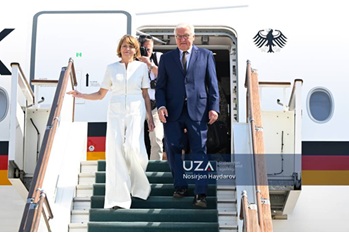
President of Germany arrives in Uzbekistan
2026-06-18 41At the invitation of the President of the Republic of Uzbekistan Shavkat Mirziyoyev, the President of the Federal Republic of Germany Frank-Walter Steinmeier, accompanied by his spouse, arrived in Uzbekistan on an official visit.
-
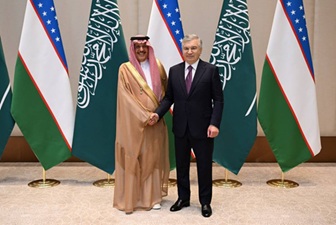
President of Uzbekistan receives Chairman of the Board of ACWA
2026-06-18 81The President of the Republic of Uzbekistan Shavkat Mirziyoyev received Muhammad Abunaiyan, Co-Chairman of the Uzbek-Saudi Business Council, Chairman of the Board of ACWA within the framework of the Tashkent Investment Forum.