The Center for Economic Research and Reforms (CERR) presented the first comprehensive assessment of carbon emissions reduction in the cement industry in Uzbekistan.
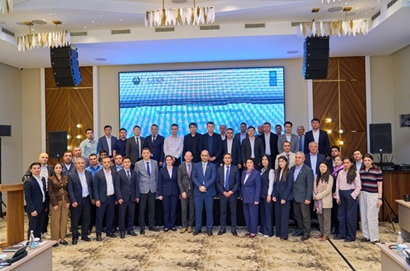
Tashkent, April 28, 2026. The Center for Economic Research and Reforms (CERR), together with the United Nations Development Programme (UNDP), held a consultative seminar on reducing carbon emissions in the cement industry in Uzbekistan.
Representatives of government agencies, the scientific community, industrial enterprises, financial institutions, and international partners participated in the event.
The aim of the event was to discuss the results of the greenhouse gas emissions assessment in the cement industry, as well as to develop practical approaches to its technological modernization and transition to a low-carbon economy.
Opening the event, CERR Deputy Director Nozimjon Ortikov noted that industry development and carbon footprint reduction are complementary objectives. According to him, modernizing cement production will simultaneously ensure economic growth and improve the sector's environmental sustainability.
UNDP Deputy Resident Representative in Uzbekistan Anas Karman emphasized the importance of the construction sector for the country's economy and the need to accelerate the implementation of low-carbon solutions in cement production.
CERR experts Abdurashid Bozorov and Bakhtiyor Ismailov presented a comprehensive baseline assessment of greenhouse gas emissions in the cement industry, prepared using the methodology of the Intergovernmental Panel on Climate Change.
Decarbonization of the cement industry is particularly relevant in the context of Uzbekistan's international climate commitments. In accordance with updated targets, the country plans to reduce the carbon intensity of GDP by 50% by 2035 compared to 2010 levels, and is also considering achieving carbon neutrality by 2060.
At the same time, the cement industry continues to demonstrate steady growth. In recent years, production has more than doubled, from 10.5 million tons in 2019 to over 20 million tons currently, and experts estimate that demand will remain high due to the development of infrastructure and the construction sector.
According to the data presented, there are 24 cement plants operating in the country with a combined capacity of approximately 37 million tons per year, with actual production volume at approximately 21.5 million tons.
Analysis shows that 13 of the largest plants account for approximately 95% of the total output, indicating a concentration of production and the need to create conditions for technological modernization.
According to CERR estimates, carbon dioxide emissions during the production of clinker (the main component of cement) amount to approximately 9 million tons per year, excluding energy consumption, fuel, and transportation. In this regard, it is noted that measures to modernize the largest plants will provide the bulk of the industry's emission reduction potential. The results of the study, including a survey of 16 leading companies accounting for approximately three-quarters of cement production, as well as a comparative analysis with international benchmarks, indicate significant potential for reducing the carbon footprint. Specifically, this potential lies in optimizing cement composition, improving energy efficiency in production, and expanding the use of alternative fuels.
However, further development of the industry and attracting green investment require improved financing conditions, greater access to modern technologies, simplified regulatory procedures, as well as the training of qualified personnel and the creation of demand for environmentally friendly products.
Implementing a range of measures, including improving energy efficiency, reducing the share of clinker, introducing waste heat recovery technologies, and developing carbon capture solutions, will ensure sustainable emissions reduction and enhance the competitiveness of the industry.
CERR Public Relations Sector


