Uzbekistan and Hungary: Initiatives to further expand cooperation put forward
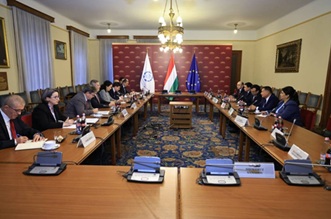
Members of the Uzbek parliament expressed their readiness to further expand ties with the Hungarian parliament. The rich experience of the National Assembly and the friendly position of this country towards Uzbekistan were especially recognized.
Uzbekistan pays special attention to the consistent implementation of agreements signed between the two countries, revitalization of the activities of parliamentary friendship groups, exchange of experience in the field of lawmaking, territorial development, social protection, tax policy and digitalization.
It was noted with satisfaction that practical cooperation between the two countries is developing steadily in all areas. It was noted that effective dialogue has been established at the level of the government, ministries, agencies and regions, and that the two countries continue to cooperate within the framework of the UN, the Organization of Turkic States and other international structures.
The growth in the volume of mutual trade, the increase in the number of joint ventures and the expansion of cooperation in a number of sectors of the economy, in connection with which a proposal was made to hold the next meeting of the Uzbek-Hungarian Business Council with the participation of a wide range of businessmen.
The results of the First Forum of Regions, held in the city of Kokand in October 2024, were highly appreciated. In order to further intensify interregional cooperation, it was proposed to hold the Second Forum in Budapest in early 2026, and special attention was paid to expanding mutual relations between the regions.
Cooperation in the cultural and humanitarian sphere is also developing steadily. The opening of the bust of the great thinker Alisher Navoi in the city of Lakitelek in October 2024 and the holding of the Days of Uzbek Cinema in Budapest in January 2025 brought the peoples of the two countries even closer.
Within the framework of the Hungarian “Stipendium Hungaricum” program, grants are allocated for 200 students annually. The need to further expand cooperation in this area was noted. In particular, initiatives to hold the III Uzbek-Hungarian Rectors' Forum in March 2026 and implement joint dual-degree programs were supported.
The issue of expanding direct air flights between the two countries was also considered in order to stimulate business, tourism and cultural exchanges.
N. Abduraimova, UzA


